
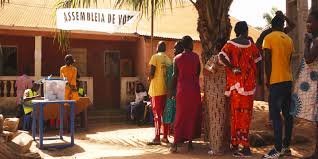
On Tuesday, 2 December, the National Electoral Commission of Guinea-Bissau announced its inability to release the results of the presidential and legislative elections, confirming that the electoral process had come to a complete halt after the army seized vote tallies and essential logistical materials.
The announcement came during the commission’s first press conference since the coup, less than a week after the military took power and suspended the elections. ECOWAS, opposition parties, and civil society organizations had requested the release of the results during a visit on Monday, but the commission stressed that this was no longer possible.
Commission officials explained that the army had confiscated vote tallies from all regions and also seized the tallies held in the capital, Bissau, along with the commission’s phones and computers, making it impossible to resume or complete the electoral process.
The press conference marked the first public appearance of commission president Nbabí Kabi since his release on Sunday, after being held for five days inside the commission’s headquarters. Kabi appeared exhausted and did not make any statements, while journalists were barred from asking questions.
With the prospects of restoring the constitutional process diminishing, the ECOWAS delegation, led by Julius Maada Bio, limited itself to calling for a return to constitutional order, without receiving guarantees regarding the release of detainees or the publication of results. The organization announced that Guinea-Bissau’s situation will be discussed at its extraordinary summit of West African heads of state on 14 December.
Meanwhile, the Guinea Human Rights League expressed growing concern, calling for clarification on the status of detainees, including opposition leader Domingo Simoes Pereira, a member of his campaign team, a party official, and the country’s Attorney General, Fernando Gomez, who remain in custody.
In a related development, the Nigerian Ministry of Foreign Affairs confirmed that opposition candidate Fernando Dias, who claims victory in the elections, has been granted political protection and asylum in Nigeria, amid continuing political and security uncertainty following the coup.