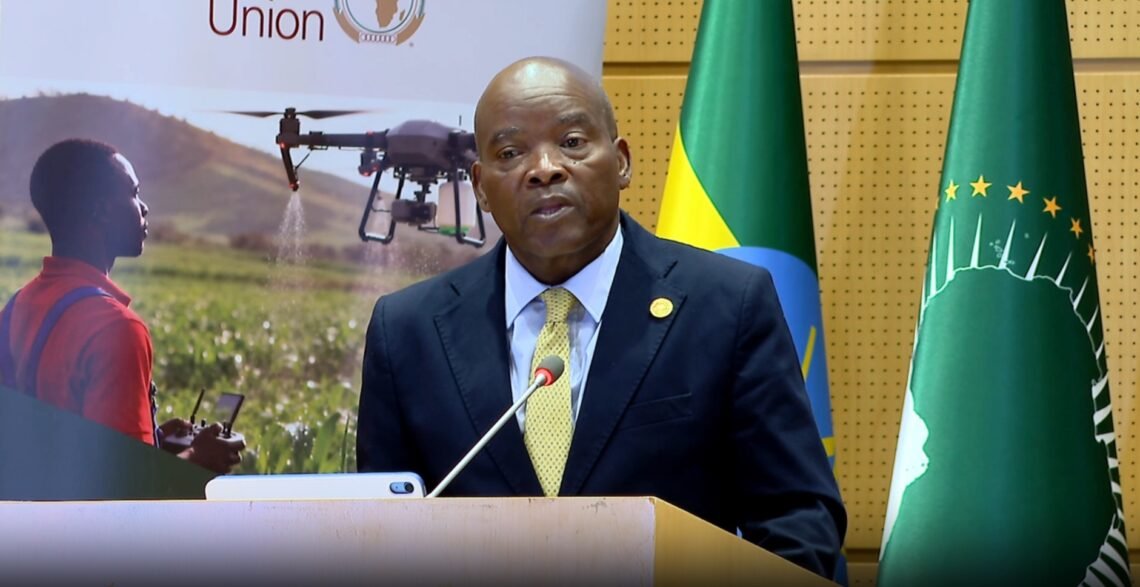
The headquarters of the African Union in Addis Ababa hosted the opening of the Digital Agriculture Conference in Africa, with the participation of officials, experts and policymakers from across the continent, at a time when there is growing consensus that digital transformation has become essential to achieving food security and promoting sustainable agricultural growth.
The conference aims to outline a continental strategy for agricultural innovation by developing a shared digital infrastructure that supports economic development and helps address challenges related to climate and production.
In her opening remarks, Deputy Chairperson of the African Union Commission, Ambassador Salma Malika Haddadi, stressed that agricultural digitization has become an urgent necessity for the continent’s survival and sustainability of its resources. She said that “agriculture is the lifeline of Africa, with more than 60% of the population relying on it,” emphasizing the importance of adopting policies that keep pace with technological advancements and support the future of food systems.
For his part, Ethiopia’s State Minister for Agriculture, Eva Moleta, noted that agricultural reform is a cornerstone of Prime Minister Abiy Ahmed’s vision, which is built on innovation and the philosophy of “Medemer,” centered on collective prosperity. He highlighted Ethiopia’s efforts to modernize the sector, from expanding irrigation and mechanization to adopting climate-resilient crops and implementing a cluster-farming model that improves farmers’ access to digital services and modern inputs, thereby strengthening efforts toward food self-sufficiency.
Moleta called for expanding the use of digital solutions in agriculture, including satellite analytics and mobile platforms, stressing the need for partnerships between governments, the private sector and international institutions to ensure wider access to technology.
Similarly, the AU Commissioner for Agriculture, Blue Economy and Sustainable Environment, Musa Vilakati, emphasized that the continent still faces major obstacles such as the impacts of climate change, land degradation, limited market access, and declining youth interest in agriculture. “We cannot allow our fertile lands to remain underutilized,” he said, urging the widespread adoption of digital technologies to increase productivity, reduce losses and improve access to financing and markets.
Vilakati further encouraged African countries to accelerate their adaptation to rapidly evolving global developments in artificial intelligence, satellite imaging and precision agriculture, describing them as tools capable of reshaping the future of farming on the continent.