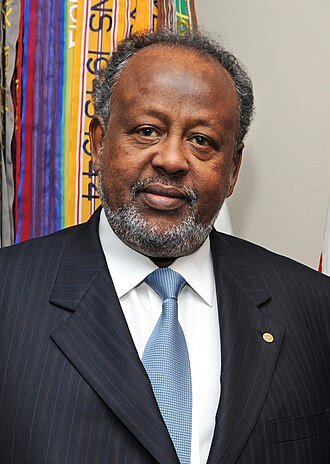
Djibouti – Djibouti’s President Ismaïl Omar Guelleh said that the United Arab Emirates represents “Israel’s vanguard in our region,” accusing Abu Dhabi of playing a role in Israel’s recognition of Somaliland, in remarks reflecting rising geopolitical tensions in East Africa.
Guelleh, 78, is preparing to run in the April 10 presidential election for a sixth term, amid the absence of any meaningful competition, after parliament removed the upper age limit for presidential candidates. He justified his decision by saying that “circumstances have changed,” pointing to what he described as growing geopolitical appetites toward his country and arguing that the population needs “protection and reassurance” in a turbulent regional environment.
Guelleh is expected to face no significant challengers, apart from the symbolic candidacy of Alexis Mohamed, a former presidential adviser now based in France. In his five previous elections, Guelleh won more than 75% of the vote.
Accusations Against Abu Dhabi
Regarding Israel’s recognition of Somaliland on December 26, the Djiboutian president expressed concern about the “use of the territory for non-peaceful purposes,” adding that the UAE had “initiated and promoted” this recognition.
Guelleh said that Saudi Arabia represents “a factor of stability and rationality,” in contrast to what he described as the UAE’s “divisive” role in several regional files, including Yemen, Sudan, Somalia and Chad.
He confirmed that he refuses to receive Somaliland’s president, while air links between Djibouti and Hargeisa remain suspended, although the land border stays open.
Economic and Social Challenges
Domestically, Guelleh acknowledged ongoing challenges, including youth unemployment, rising public debt and poverty levels, despite the country receiving the highest per capita public aid in East Africa. He defended his record, citing expanded social support programs, universal health coverage and higher vaccination rates, asserting that “every Djiboutian is entitled to three meals a day.”
Djibouti imports around 90% of its food, as less than 5% of its land is arable — a situation the president described as “a matter of national security,” pledging to promote agroecology.
Green Industrial Project
Guelleh revealed plans to establish a green industrial zone with investments exceeding $8 billion, aiming to raise GDP to $10 billion and increase per capita income to $10,000 annually, powered by wind and solar energy to produce green hydrogen, ammonia and metals.
International Relations and Military Bases
On the dispute with DP World, Guelleh stressed that the Doraleh Container Terminal “will never return” to the company.
He also rejected joining the Abraham Accords or any U.S.-led peace initiatives under President Donald Trump, saying his country needs its resources for development.
Guelleh expressed satisfaction with the new defense agreement with France, noting the settlement of the dispute over Héron Islet, as well as French support worth $80 million for a new airport project expected to be operational by 2029, backed by French President Emmanuel Macron.
Djibouti is set to mark the 50th anniversary of its independence in 2027, a milestone Guelleh would preside over if reelected. He said his country now “stands on its own feet” despite regional challenges.