Southeastern Central African Republic has witnessed a serious security escalation following violent clashes between government armed forces and the AAKG militia, coinciding with the announcement of partial results from the general elections held on December 28.
The fighting was concentrated around the town of Zémio and surrounding areas, where the town came under direct attack on January 1, reviving fears of a deterioration in security in this sensitive border region with South Sudan.
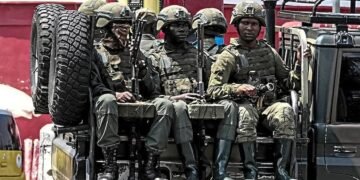
The militia was originally formed as a self-defense force linked to the Zande community and was previously described as an ally of the authorities in Bangui, with support from Russian elements associated with the Wagner Group.
According to converging estimates, the activities of the AAKG militia have resulted in at least 200 deaths, most of them civilians, in addition to several members of the Central African armed forces, Russian nationals, and one UN peacekeeper.
The clashes have displaced thousands of civilians, exacerbating tensions between local communities and deepening the humanitarian crisis, amid growing concerns over potential regional repercussions given the militia’s cross-border activity with South Sudan.
In another field development, dozens of militia fighters launched an attack late Thursday night on a checkpoint near the town of Bambouti, wounding several soldiers before UN peacekeeping forces (MINUSCA) intervened to repel the assault. Fighting resumed on Friday morning.
The escalation dates back to December 28, when militia gunmen disrupted the electoral process in the border town of Bambouti, abducting the deputy prefect, a gendarme, and an election official who was later killed—an incident that marked a dangerous turning point in the crisis.
In response, the Central African armed forces, backed by their Russian allies, launched a large-scale military operation involving the use of combat helicopters. According to the United Nations, around 2,500 people fled from Bambouti into South Sudan to escape the fighting.